
The organization believed users were failing
Adoption Failure Had Already Become Operational Risk

Within 90 days, I identified the system failures driving low adoption and developed a strategy to stabilize operational workflows across a high-compliance SaaS platform.
ROLE
Digital Experience Strategy Lead (SME/IC Internal Lead)
OWNERSHIP
Cross-functional adoption, onboarding, and workflow strategy
Overview
AtlasMove developed a connected SaaS ecosystem supporting U.S. military relocation operations. The platform included a service member app for managing relocation details and tracking stored items, a logistics CRM used by Relay Operations Group (ROG) to coordinate approved moving vendors and compliance workflows, and a role-based mobile app used by packing, transportation, and delivery crews in the field.
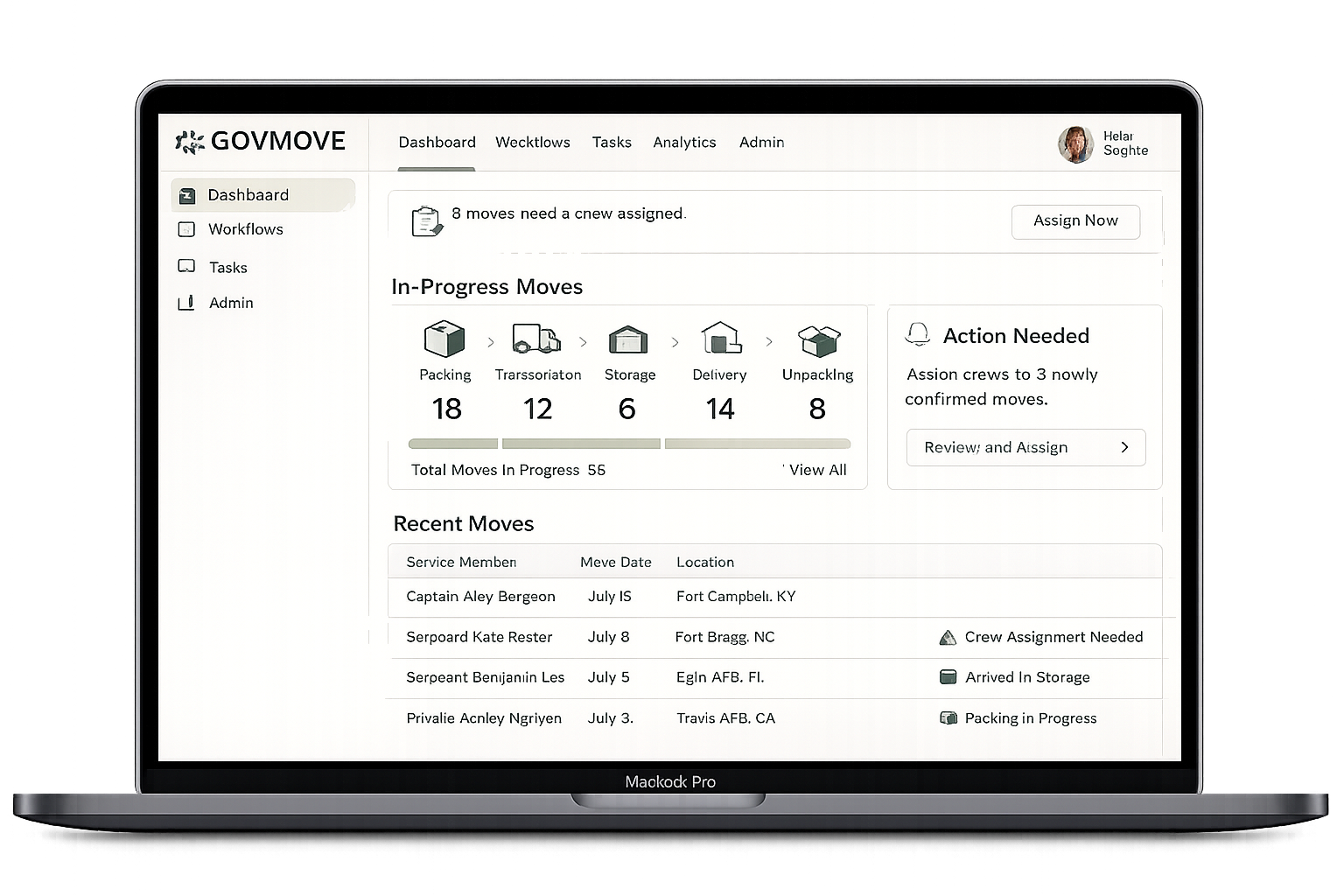
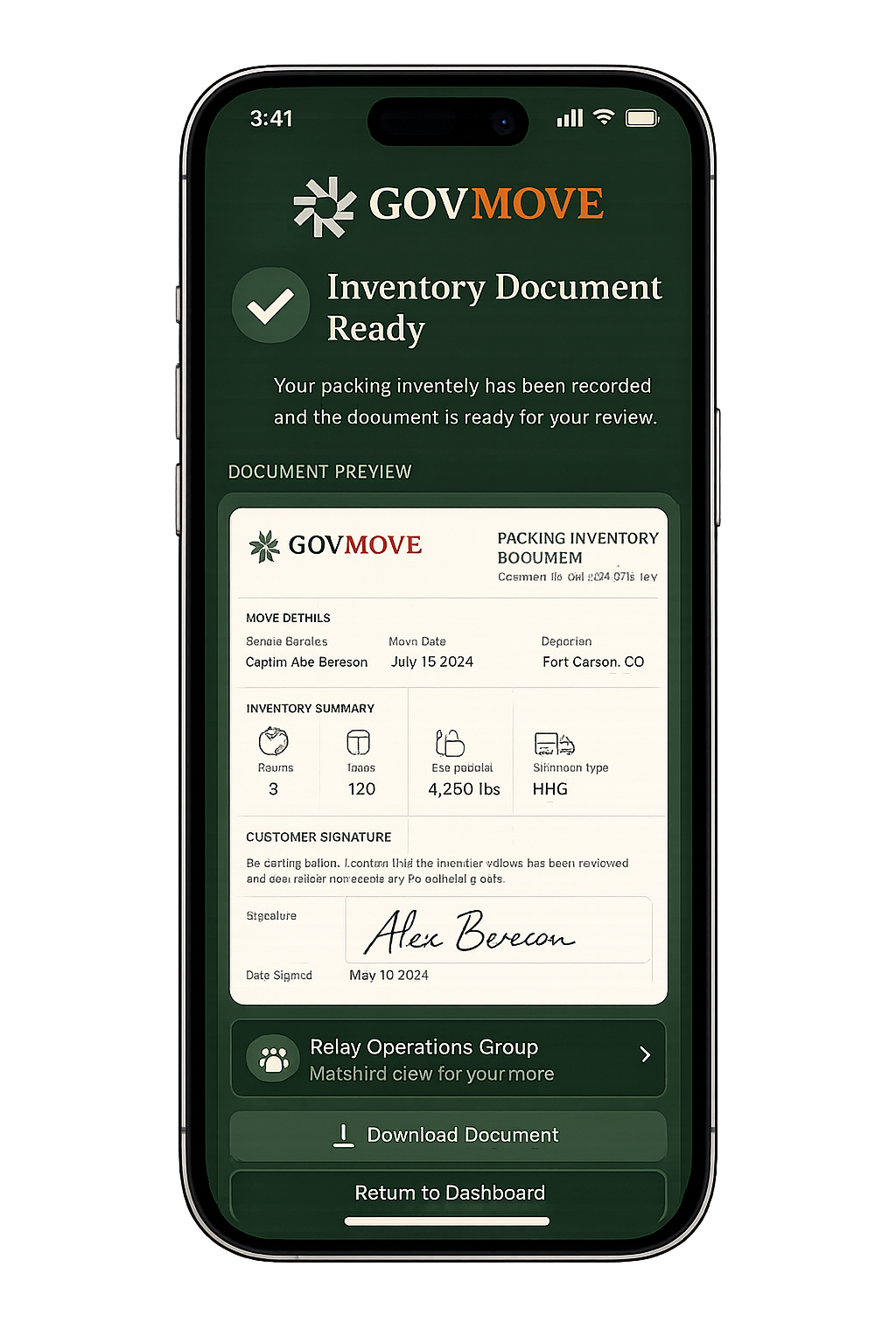
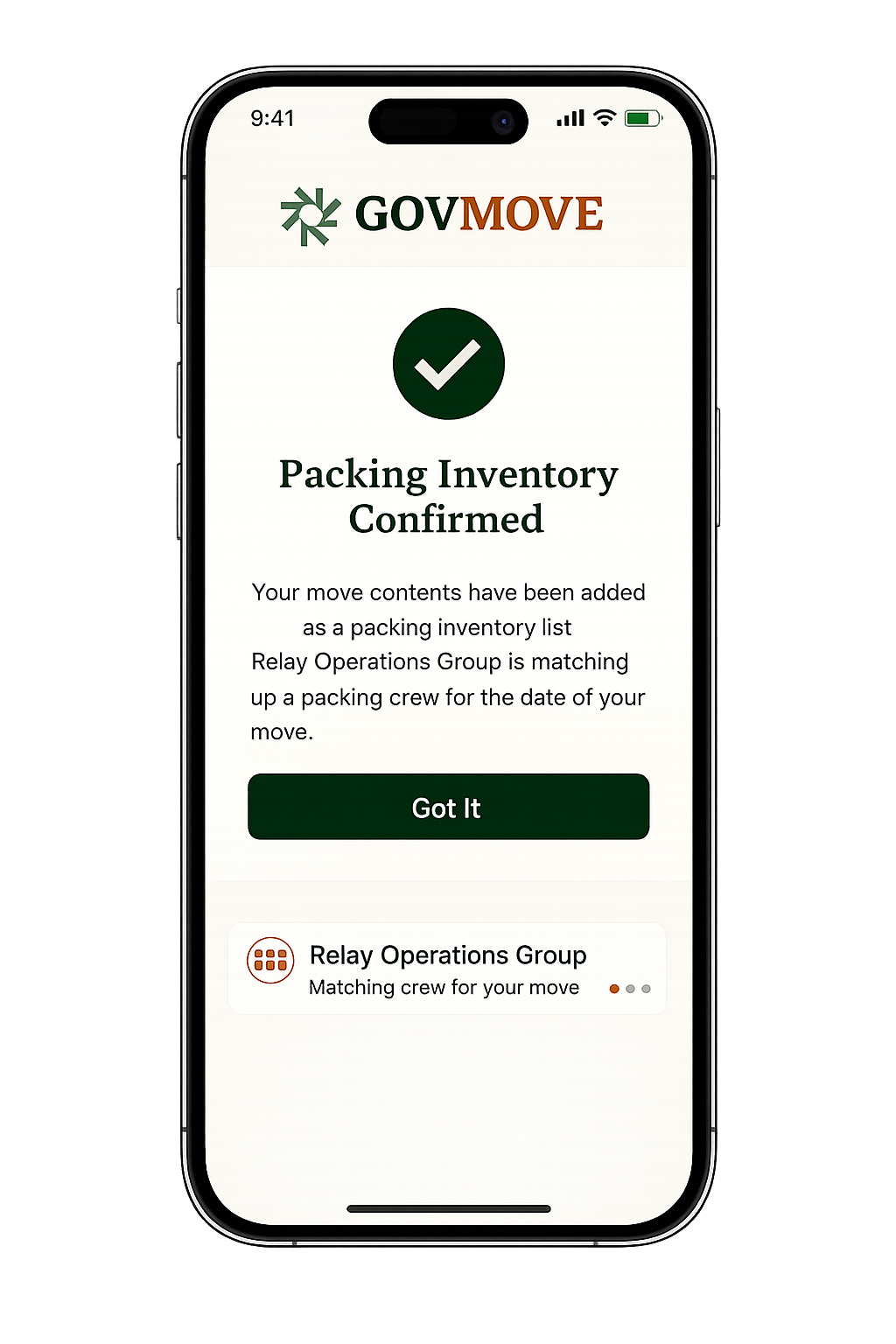
The ecosystem operated under intense operational pressure.
The ecosystem operated under a high-pressure government contract that required ROG to scale military move operations nationwide by 2026.
At the time I joined, adoption across the platform was low, operational workflows were breaking down, and support volume was escalating across both service member and moving organization experiences.
The Problem
The Platform Was Growing Faster Than The System Supporting It
The issue wasn’t user resistance.
The ecosystem depended on thousands of distributed users completing operational workflows correctly across multiple connected applications.
But onboarding, identity, training, and workflow ownership were fragmented across teams.
No one had full visibility into where adoption was failing or how those failures impacted operational performance downstream.
At a glance, operations appeared active:
Support teams were responding to issues.
Training content existed.
New platform features were shipping.
Vendor onboarding continued scaling.
The system told a different story:
Authentication failures were suppressing adoption.
Critical workflows were being completed incorrectly.
Support volume was escalating across teams.
Operational breakdowns were creating compliance and contract risk.
The Reality
Multiple Systems. No Shared Visibility.
The ecosystem wasn’t failing in one place—it was failing across disconnected operational systems
Identity workflows were breaking across platforms
Support teams were responding without root-cause visibility
Training and onboarding was disconnected from operational workflows
Critical workflow failures hid inside fragmented reporting systems
Each team managed its own operational layer.
Each measured different signals.
No one had visibility across the full ecosystem.
The Diagnosis
The System Couldn’t Measure Where Adoption Was Failing.
I conducted a cross-platform operational audit to identify where onboarding, workflow completion, and adoption were breaking down across the ecosystem.
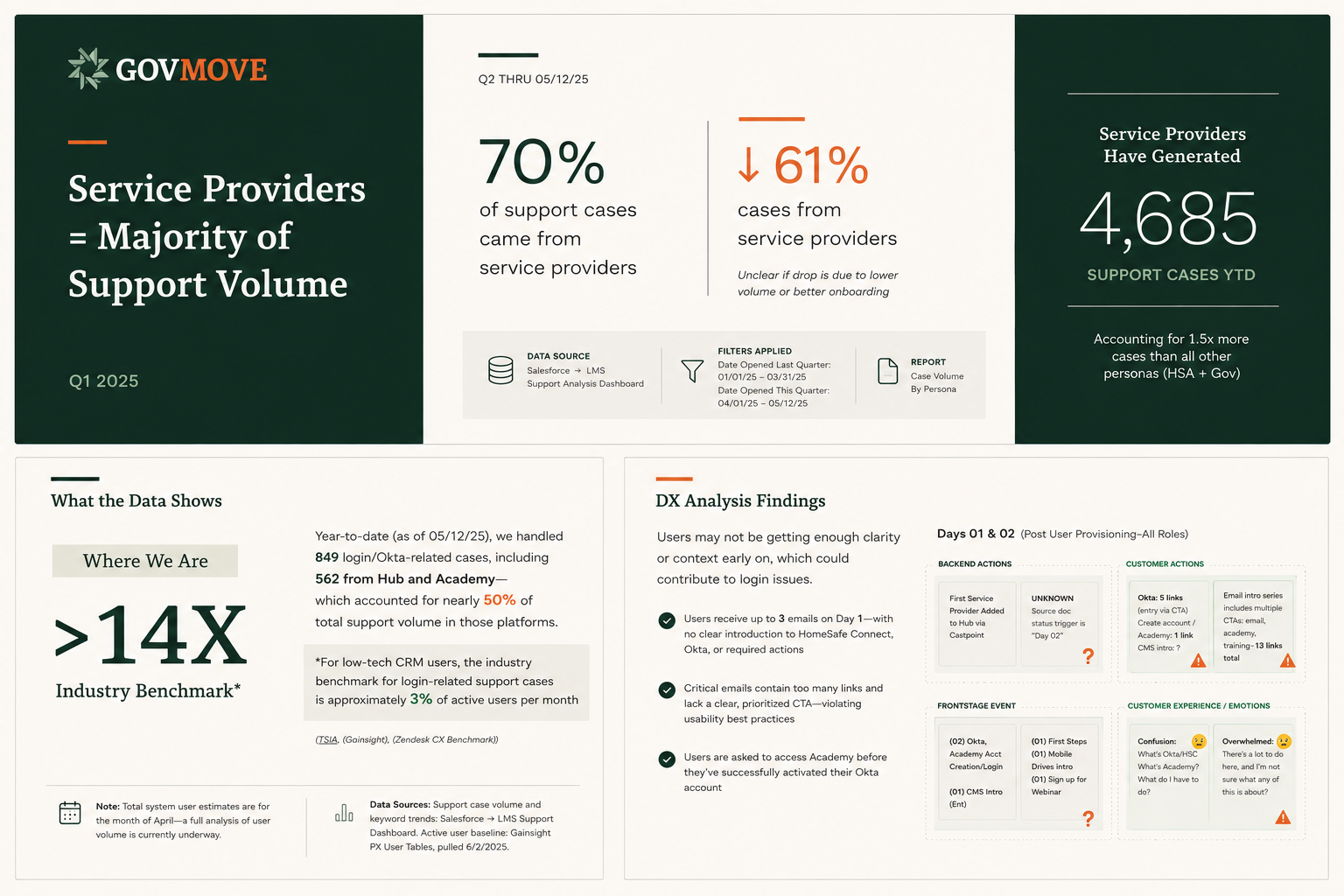
What I found was fragmented instrumentation, incomplete behavioral visibility, and disconnected reporting systems that prevented teams from understanding how operational failures were spreading across products.
Data Sources Included:
Product Adoption + Engagement
Gainsight PX, DataDog
LMS + Enablement
Northpass LMS
CRM + Workflow Analytics
GA4, Salesforce
Support + Operational Data
Knowledge Center analytics, support tickets, TTV reporting
Identity + Access Systems
Okta
This analysis revealed a critical disconnect.
Operational teams were making adoption decisions without complete workflow visibility across the platform ecosystem.
Critical workflows lacked:
- Behavioral Instrumentation
- Path Analysis
- Cross-platform Reporting
- Operational Failure Visibility
A key finding:
The organization had detailed support data but limited visibility into the behaviors creating those support issues.
The most actionable operational insights came from support escalation patterns rather than product analytics infrastructure.
This meant:
- Critical workflows weren’t measurable
- Operational failures spread silently across systems
- Adoption issues were diagnosed reactively
- Teams lacked shared visibility into user behavior
My findings were operationalized through cross-functional readiness reports, workflow diagnostics, support analysis, and adoption infrastructure recommendations used to realign onboarding, enablement, and product strategy priorities.
The Insight
Two Workflow Failures Were Disrupting The Entire Ecosystem.
Support tickets revealed recurring operational breakdowns across onboarding, authentication, and inventory management.
But the real issue wasn’t isolated to usability friction—it was that critical operational workflows were failing at key dependency points across the ecosystem.
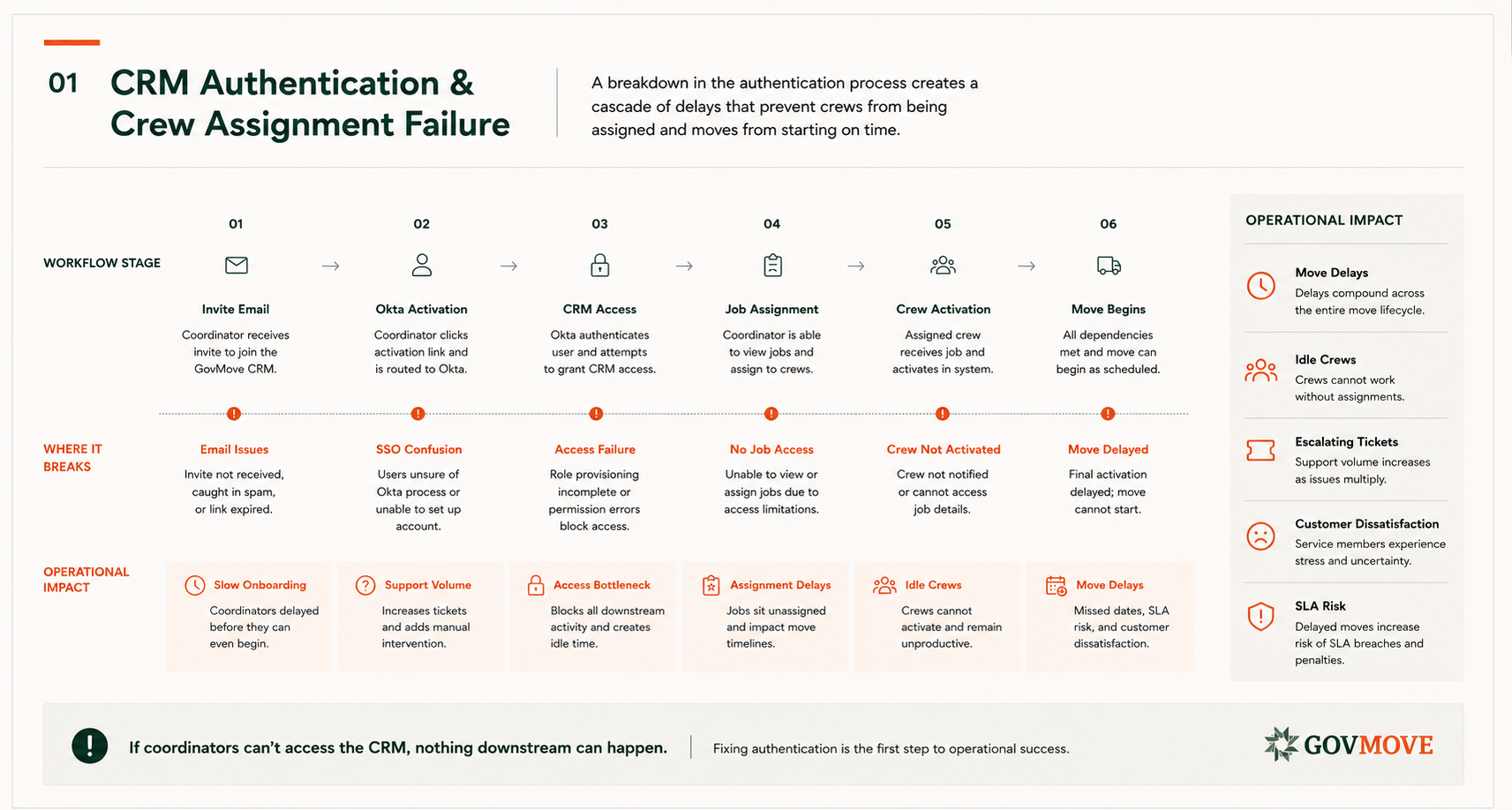
Workflow 01 | CRM Activation & Assignment
Authentication Failure Was Blocking Operational Activation
CRM coordinators frequently failed during Okta onboarding and first-login workflows.
When coordinators couldn’t access the CRM:
- moving crews couldn’t be assigned
- workflows stalled before activation
- operational delays spread downstream
- service members were left waiting without visibility
The issue wasn’t simply authentication friction. It was an operational dependency failure at the beginning of the move lifecycle.
Workflow 02 | Packing Inventory
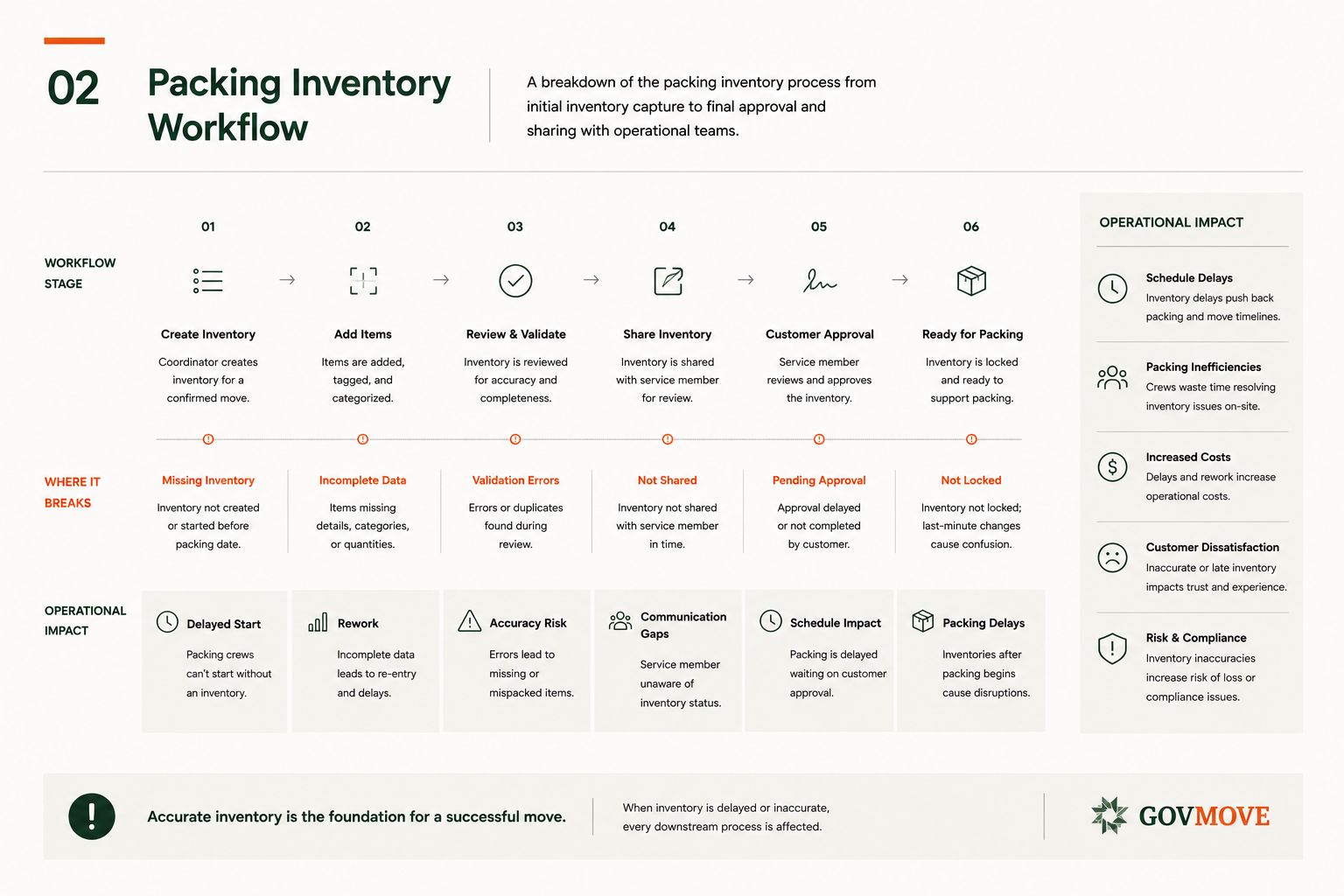
Inventory Failure Disrupted The Entire Move Lifecycle
Packing crews initiated the operational chain for every move.
But inventory workflows were highly complex, poorly supported, and vulnerable to incomplete task completion.
When inventory workflows failed:
- transportation workflows stalled
- delivery coordination broke down
- compliance documentation became unreliable
- payment timelines were delayed
- support escalations surged
A single incomplete workflow could disrupt the entire relocation lifecycle.
The Strategy
Rebuilding Adoption Around Operational Workflows
The strategy focused on stabilizing the operational workflows that directly impacted onboarding, move execution, support volume, and workflow continuity across the ecosystem.
Instead of treating onboarding, training, support, and in-app guidance as separate initiatives, I rebuilt the approach around measurable operational workflows tied directly to business outcomes and downstream operational dependencies.

Stabilizing Onboarding & Activation
I redesigned onboarding around role-specific activation paths, including a pre-login enablement experience built to reduce Okta authentication failure before first system access.

Prioritizing high-risk operational workflows
Mapped critical workflows across the ecosystem to identify where onboarding friction, incomplete tasks, and operational breakdowns were creating downstream delays and support escalation.

Rebuilding workflow visibility
Introduced workflow identification frameworks and data-informed prioritization models designed to improve operational visibility across onboarding, support, and field operations.

Preventing silent operational failure
Defined in-app guidance and workflow enforcement opportunities to reduce incomplete inventory workflows, operational bottlenecks, and hidden compliance risk across the move lifecycle.
Operational Activation Strategy
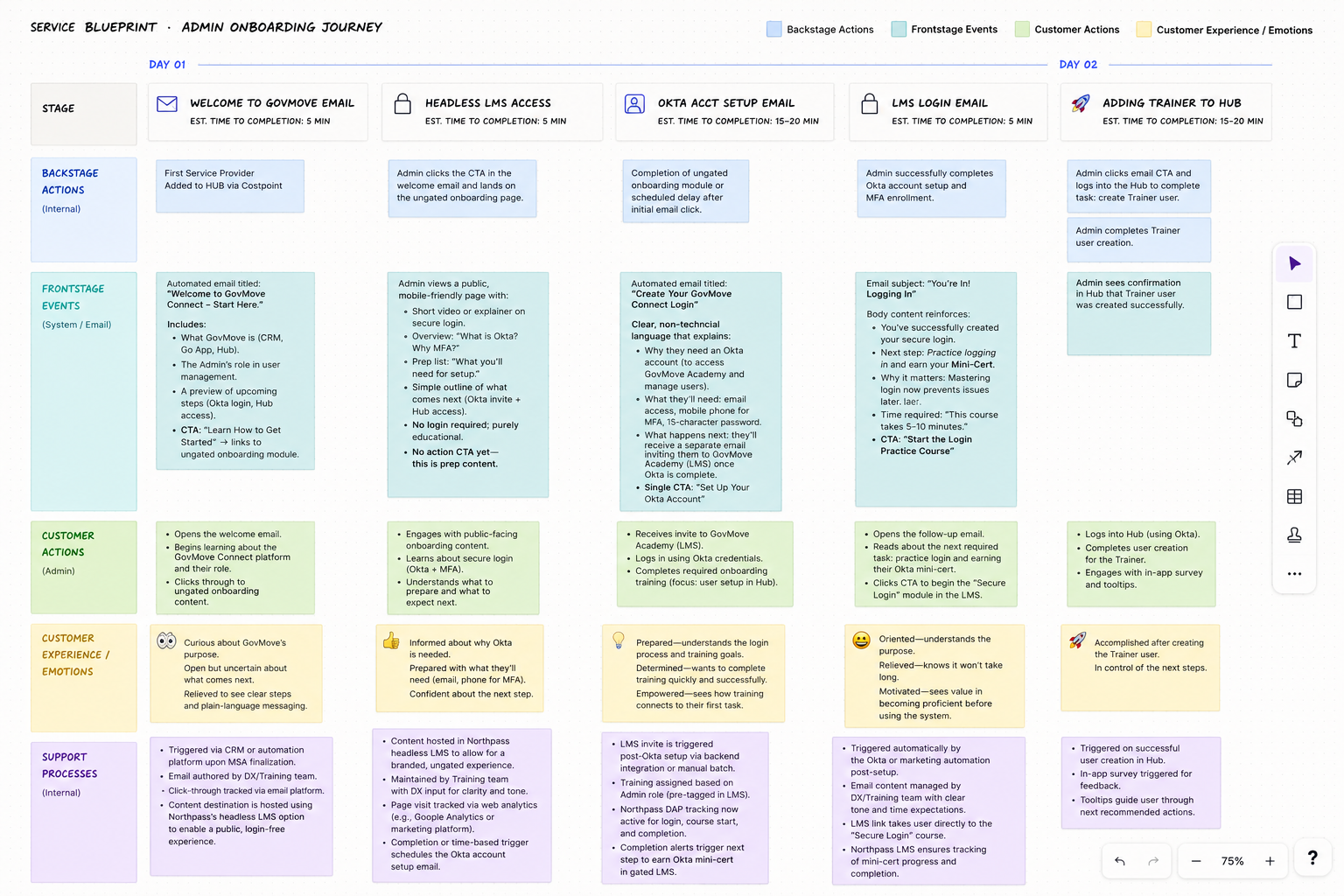
An onboarding strategy built around operational readiness—not just account creation
I proposed a headless LMS and pre-login enablement system designed to:
- Train users on Okta authentication before first login
- Reduce onboarding confusion
- Accelerate time-to-first-task
- Decrease authentication-related support volume
- Improve activation across operational roles
This created a clearer path from onboarding to operational readiness.
Inventory Workflow Stabilization
Inventory workflows were redesigned around operational continuity
I mapped the downstream dependencies tied to inventory completion and identified where incomplete workflows disrupted transportation, delivery coordination, compliance documentation, and payment processing.
The proposed workflow strategy focused on:
- Guided workflow completion
- Operational reinforcement patterns
- Role-based support moments
- Workflow enforcement opportunities
- Reduced operational lag across the move lifecycle
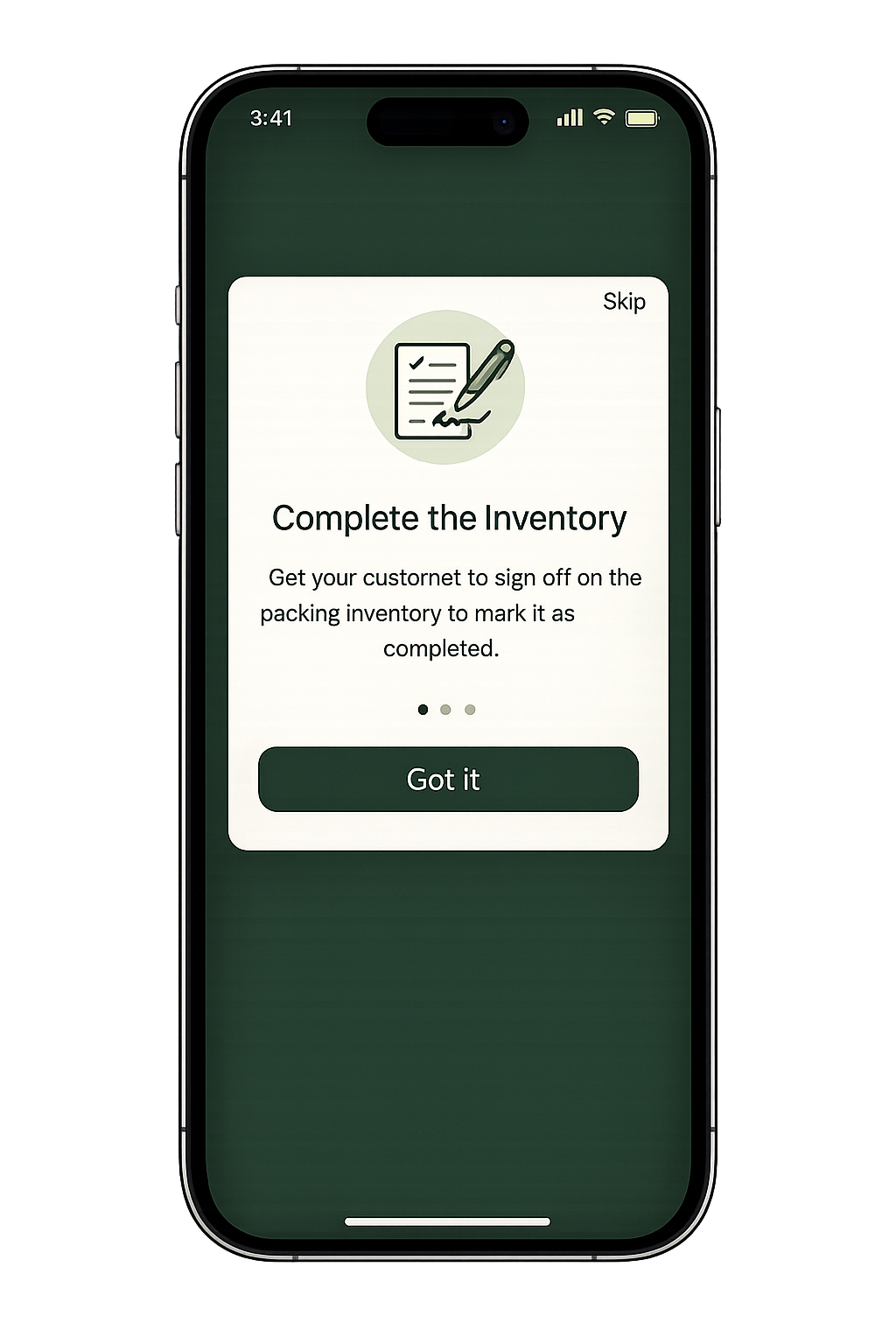
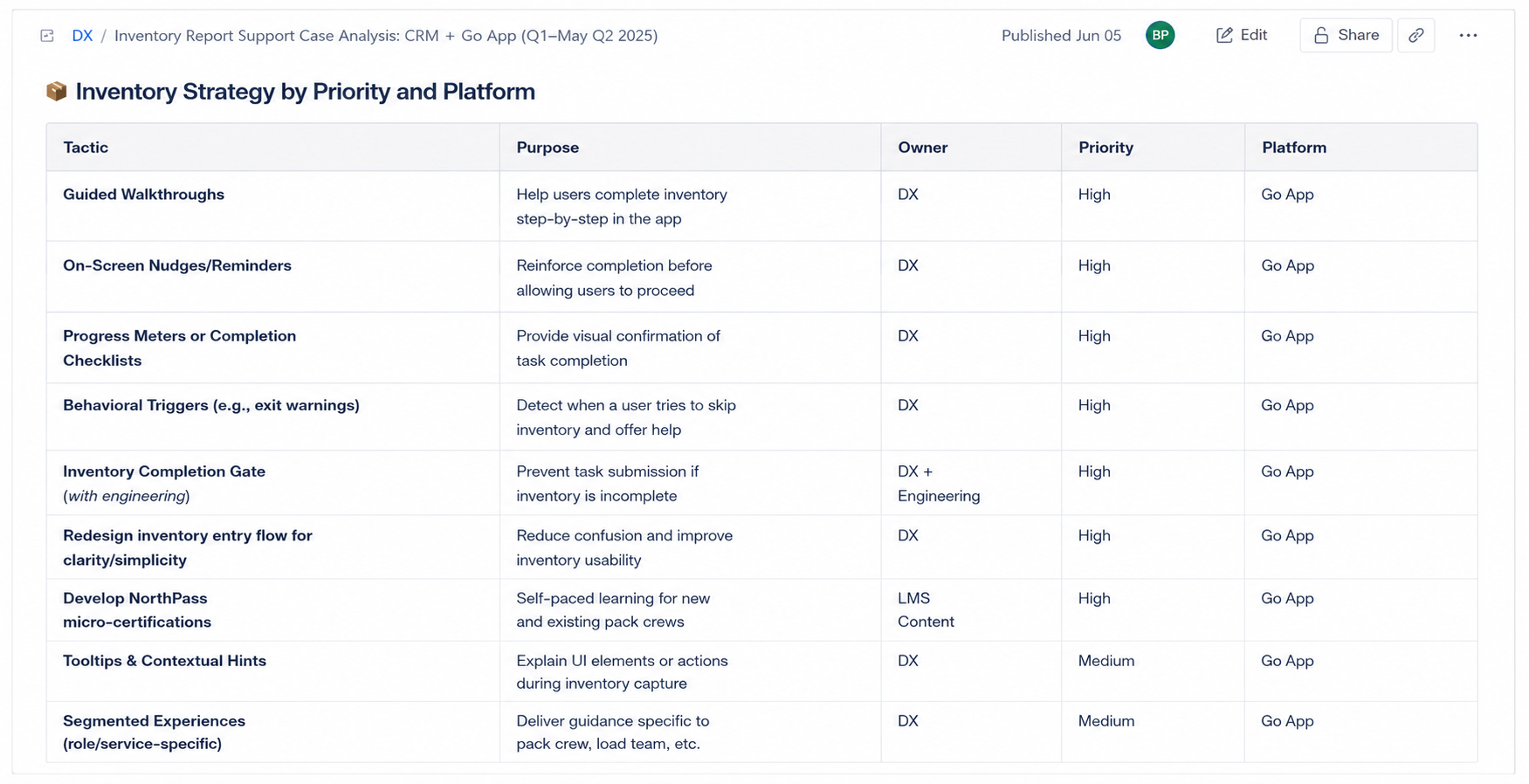
The strategy transformed adoption from a training problem into an operational systems initiative—connecting onboarding, workflow completion, support reduction, and operational continuity into a measurable adoption framework.
The Impact
The Organization Finally Had Visibility Into The Real Problem
Within 90 days, the organization shifted from reactive support escalation to a measurable operational adoption strategy grounded in workflow visibility, onboarding diagnostics, and cross-platform operational dependencies.
For the first time, leadership had a clear view into where adoption was failing, how those failures impacted operational continuity, and which workflows carried the highest operational risk.
Operational Findings
14.2x
Authentication failure benchmark

42.45%
Users impacted by login and access friction
7.21x
Inventory workflow support volume above benchmark
Projected Operational Improvements
84.5%
Projected onboarding-to-activation improvement

68%+
Increase in move completions
$50K+
Estimated annual support reduction opportunity
By aligning customer behavior, messaging, and measurement, the business shifted from generating activity to generating revenue.
The organization finally had visibility into the operational failures disrupting adoption across the ecosystem.
But by the time the system-level issues were fully understood, the contract was already under significant operational strain.
Case Studies
Healthcare SaaS • Research • Retention

Trust in the AI Was Lost at Login
Protecting Clinical Momentum in an AI-Powered EHR
A mixed-method research initiative uncovered how authentication friction reduced confidence in AI-assisted documentation and disrupted critical prescribing workflows →
↑ Workflow Continuity • ↑ Clinician Confidence •
↓ Authentication Friction
Higher Ed • Enrollment Strategy • Acquisition

Enrollment Friction Was Limiting Growth
Students Couldn't Find What They Needed to Believe
Organic traffic had successfully scaled, but lead generation performance had plateaued. Behavioral research uncovered gaps that traditional CRO metrics alone couldn't explain →
↑ Strategic Clarity • ↑ Customer Understanding •
↑ Growth Alignment
Pharma • Product Design • Retention

Improving Adoption Through Behavioral Design
Designing Around the Right Support System Changed Everything
Behavioral research, experience redesign, and coordinated support workflows helped users understand what mattered, what to do next, and when intervention was needed →
↑ Onboarding Completion • ↑ 7-Day Retention •
↓ Response Time
My Expertise Delivers For:
Marketing & Growth
Customer Acquisition & Conversion
Journey Mapping & Funnel Optimization
CRM & Retention Strategy
Behavioral Segmentation & Personalization
Landing Page & Onboarding Optimization
Customer Research & Insight Generation
AI-Supported Content & Experience Strategy
Product & CX
UX & Digital Experience Strategy
Onboarding & Adoption Systems
DAP Strategy & Optimization
Service Blueprinting
Customer & Employee Experience
Behavioral Design & Usability Optimization
AI-supported Product & Support Experiences
Strategy & Transformation
Cross-functional Alignment
Experience Transformation Initiatives
Operational Experience Design
Customer Intelligence Systems
Support and Onboarding Optimization
Research-driven Decision-making
AI-supported Workflow and Systems Strategy
Let’s Build Better Systems for People

© 2026 Beth Pavinich. All rights reserved.
All content, case studies, strategy frameworks, written materials, visuals, diagrams, concepts, and supporting artifacts featured on this site are the intellectual property of Beth Pavinich and may not be copied, reproduced, distributed, modified, adapted, republished, or used in whole or in part without prior written permission.
Many projects featured on this site were completed under non-disclosure agreements (NDAs). Client names and proprietary details have been anonymized. Outcomes reflect engagement-specific performance data, client reporting, benchmark analysis, and directional business impact estimates where exact figures cannot be disclosed.

The organization believed users were failing
Adoption Failure Had Already Become Operational Risk
Within 90 days, I identified the system failures driving low adoption and developed a strategy to stabilize operational workflows across a high-compliance SaaS platform.
ROLE
Digital Experience Strategy Lead (SME/IC Internal Lead)
OWNERSHIP
Cross-functional adoption, onboarding, and workflow strategy
///
///
///
Overview
AtlasMove developed a connected SaaS ecosystem supporting U.S. military relocation operations. The platform included a service member app for managing relocation details and tracking stored items, a logistics CRM used by Relay Operations Group (ROG) to coordinate approved moving vendors and compliance workflows, and a role-based mobile app used by packing, transportation, and delivery crews in the field.
The ecosystem operated under intense operational pressure.
The ecosystem operated under a high-pressure government contract that required ROG to scale military move operations nationwide by 2026.
At the time I joined, adoption across the platform was low, operational workflows were breaking down, and support volume was escalating across both service member and moving organization experiences.
The Problem
The Platform Was Growing Faster Than The System Supporting It
The issue wasn’t user resistance.
The ecosystem depended on thousands of distributed users completing operational workflows correctly across multiple connected applications.
But onboarding, identity, training, and workflow ownership were fragmented across teams.
No one had full visibility into where adoption was failing or how those failures impacted operational performance downstream.
At a glance, operations appeared active:
Support teams were responding to issues.
Training content existed.
New platform features were shipping.
Vendor onboarding continued scaling.
The system told a different story:
Authentication failures were suppressing adoption.
Critical workflows were being completed incorrectly.
Support volume was escalating across teams.
Operational breakdowns were creating compliance and contract risk.
The Reality
Multiple Systems. No Shared Visibility.
The ecosystem wasn’t failing in one place—it was failing across disconnected operational systems
Identity workflows were breaking across platforms
Support teams were responding without root-cause visibility
Training and onboarding was disconnected from operational workflows
Critical workflow failures hid inside fragmented reporting systems
Each team managed its own operational layer.
Each measured different signals.
No one had visibility across the full ecosystem.
The Diagnosis
The System Couldn’t Measure Where Adoption Was Failing.
I conducted a cross-platform operational audit to identify where onboarding, workflow completion, and adoption were breaking down across the ecosystem.
What I found was fragmented instrumentation, incomplete behavioral visibility, and disconnected reporting systems that prevented teams from understanding how operational failures were spreading across products.
Data Sources Included:
Product Adoption + Engagement
Gainsight PX, DataDog
LMS + Enablement
Northpass LMS
CRM + Workflow Analytics
GA4, Salesforce
Support + Operational Data
Knowledge Center analytics, support tickets, TTV reporting
Identity + Access Systems
Okta
This analysis revealed a critical disconnect.
Operational teams were making adoption decisions without complete workflow visibility across the platform ecosystem.
Critical workflows lacked:
- Behavioral Instrumentation
- Path Analysis
- Cross-platform Reporting
- Operational Failure Visibility
A key finding:
The organization had detailed support data but limited visibility into the behaviors creating those support issues.
The most actionable operational insights came from support escalation patterns rather than product analytics infrastructure.
This meant:
- Critical workflows weren’t measurable
- Operational failures spread silently across systems
- Adoption issues were diagnosed reactively
- Teams lacked shared visibility into user behavior
My findings were operationalized through cross-functional readiness reports, workflow diagnostics, support analysis, and adoption infrastructure recommendations used to realign onboarding, enablement, and product strategy priorities.
The Insight
Two Workflow Failures Were Disrupting The Entire Ecosystem.
Support tickets revealed recurring operational breakdowns across onboarding, authentication, and inventory management.
But the real issue wasn’t isolated to usability friction—it was that critical operational workflows were failing at key dependency points across the ecosystem.
Workflow 01 | CRM Activation & Assignment
Authentication Failure Was Blocking Operational Activation
CRM coordinators frequently failed during Okta onboarding and first-login workflows.
When coordinators couldn’t access the CRM:
- moving crews couldn’t be assigned
- workflows stalled before activation
- operational delays spread downstream
- service members were left waiting without visibility
The issue wasn’t simply authentication friction. It was an operational dependency failure at the beginning of the move lifecycle.
Workflow 02 | Packing Inventory
Inventory Failure Disrupted The Entire Move Lifecycle
Packing crews initiated the operational chain for every move.
But inventory workflows were highly complex, poorly supported, and vulnerable to incomplete task completion.
When inventory workflows failed:
- transportation workflows stalled
- delivery coordination broke down
- compliance documentation became unreliable
- payment timelines were delayed
- support escalations surged
A single incomplete workflow could disrupt the entire relocation lifecycle.
The Strategy
Rebuilding Adoption Around Operational Workflows
The strategy focused on stabilizing the operational workflows that directly impacted onboarding, move execution, support volume, and workflow continuity across the ecosystem.
Instead of treating onboarding, training, support, and in-app guidance as separate initiatives, I rebuilt the approach around measurable operational workflows tied directly to business outcomes and downstream operational dependencies.

Stabilizing Onboarding & Activation
I redesigned onboarding around role-specific activation paths, including a pre-login enablement experience built to reduce Okta authentication failure before first system access.

Prioritizing high-risk operational workflows
Mapped critical workflows across the ecosystem to identify where onboarding friction, incomplete tasks, and operational breakdowns were creating downstream delays and support escalation.

Rebuilding workflow visibility
Introduced workflow identification frameworks and data-informed prioritization models designed to improve operational visibility across onboarding, support, and field operations.

Preventing silent operational failure
Defined in-app guidance and workflow enforcement opportunities to reduce incomplete inventory workflows, operational bottlenecks, and hidden compliance risk across the move lifecycle.
Operational Activation Strategy
An onboarding strategy built around operational readiness—not just account creation
I proposed a headless LMS and pre-login enablement system designed to:
- Train users on Okta authentication before first login
- Reduce onboarding confusion
- Accelerate time-to-first-task
- Decrease authentication-related support volume
- Improve activation across operational roles
This created a clearer path from onboarding to operational readiness.
Inventory Workflow Stabilization
Inventory workflows were redesigned around operational continuity
I mapped the downstream dependencies tied to inventory completion and identified where incomplete workflows disrupted transportation, delivery coordination, compliance documentation, and payment processing.
The proposed workflow strategy focused on:
- Guided workflow completion
- Operational reinforcement patterns
- Role-based support moments
- Workflow enforcement opportunities
- Reduced operational lag across the move lifecycle
The strategy transformed adoption from a training problem into an operational systems initiative—connecting onboarding, workflow completion, support reduction, and operational continuity into a measurable adoption framework.
The Impact
The Organization Finally Had Visibility Into The Real Problem
Within 90 days, the organization shifted from reactive support escalation to a measurable operational adoption strategy grounded in workflow visibility, onboarding diagnostics, and cross-platform operational dependencies.
For the first time, leadership had a clear view into where adoption was failing, how those failures impacted operational continuity, and which workflows carried the highest operational risk.
Operational Findings
14.2x
Authentication failure benchmark
42.45%
Users impacted by login and access friction
7.21x
Inventory workflow support volume above benchmark
Projected Operational Improvements
84.5%
Projected onboarding-to-activation improvement
68%+
Increase in move completions
$50K+
Estimated annual support reduction opportunity
By aligning customer behavior, messaging, and measurement, the business shifted from generating activity to generating revenue.
The organization finally had visibility into the operational failures disrupting adoption across the ecosystem.
But by the time the system-level issues were fully understood, the contract was already under significant operational strain.
Case Studies
Trust in the AI Was Lost at Login
Protecting Clinical Momentum in an AI-Powered EHR
A mixed-method research initiative uncovered how authentication friction reduced confidence in AI-assisted documentation and disrupted critical prescribing workflows →
↑ Workflow Continuity • ↑ Clinician Confidence •
↓ Authentication Friction

Healthcare SaaS • Research • Retention
Enrollment Friction Was Limiting Growth
Students Couldn't Find What They Needed to Believe
Organic traffic had successfully scaled, but lead generation performance had plateaued. Behavioral research uncovered gaps that traditional CRO metrics alone couldn't explain →
↑ Strategic Clarity • ↑ Customer Understanding •
↑ Growth Alignment
Higher Ed • Enrollment Strategy • Acquisition
Improving Adoption Through Behavioral Design
Designing Around the Right Support System Changed Everything
Behavioral research, experience redesign, and coordinated support workflows helped users understand what mattered, what to do next, and when intervention was needed →
↑ Onboarding Completion • ↑ 7-Day Retention •
↓ Response Time
Pharma • Product Design • Retention
My Expertise Delivers For:
Marketing & Growth
Customer Acquisition & Conversion
Journey Mapping & Funnel Optimization
CRM & Retention Strategy
Behavioral Segmentation & Personalization
Landing Page & Onboarding Optimization
Customer Research & Insight Generation
AI-Supported Content & Experience Strategy
Product & CX
UX & Digital Experience Strategy
Onboarding & Adoption Systems
DAP Strategy & Optimization
Service Blueprinting
Customer & Employee Experience
Behavioral Design & Usability Optimization
AI-supported Product & Support Experiences
Strategy & Transformation
Cross-functional Alignment
Experience Transformation Initiatives
Operational Experience Design
Customer Intelligence Systems
Support and Onboarding Optimization
Research-driven Decision-making
AI-supported Workflow and Systems Strategy
Let’s Build Better Systems for People
© 2026 Beth Pavinich. All rights reserved.
All content, case studies, strategy frameworks, written materials, visuals, diagrams, concepts, and supporting artifacts featured on this site are the intellectual property of Beth Pavinich and may not be copied, reproduced, distributed, modified, adapted, republished, or used in whole or in part without prior written permission.
Many projects featured on this site were completed under non-disclosure agreements (NDAs). Client names and proprietary details have been anonymized. Outcomes reflect engagement-specific performance data, client reporting, benchmark analysis, and directional business impact estimates where exact figures cannot be disclosed.

The organization believed users were failing
Adoption Failure Had Already Become Operational Risk
Within 90 days, I identified the system failures driving low adoption and developed a strategy to stabilize operational workflows across a high-compliance SaaS platform.
ROLE
Digital Experience Strategy Lead (SME/IC Internal Lead)
OWNERSHIP
Cross-functional adoption, onboarding, and workflow strategy
///
///
///
Overview
AtlasMove developed a connected SaaS ecosystem supporting U.S. military relocation operations. The platform included a service member app for managing relocation details and tracking stored items, a logistics CRM used by Relay Operations Group (ROG) to coordinate approved moving vendors and compliance workflows, and a role-based mobile app used by packing, transportation, and delivery crews in the field.
The ecosystem operated under intense operational pressure.
The ecosystem operated under a high-pressure government contract that required ROG to scale military move operations nationwide by 2026.
At the time I joined, adoption across the platform was low, operational workflows were breaking down, and support volume was escalating across both service member and moving organization experiences.
The Problem
The Platform Was Growing Faster Than The System Supporting It
The issue wasn’t user resistance.
The ecosystem depended on thousands of distributed users completing operational workflows correctly across multiple connected applications.
But onboarding, identity, training, and workflow ownership were fragmented across teams.
No one had full visibility into where adoption was failing or how those failures impacted operational performance downstream.
At a glance, operations appeared active:
Support teams were responding to issues.
Training content existed.
New platform features were shipping.
Vendor onboarding continued scaling.
The system told a different story:
Authentication failures were suppressing adoption.
Critical workflows were being completed incorrectly.
Support volume was escalating across teams.
Operational breakdowns were creating compliance and contract risk.
The Reality
Multiple Systems. No Shared Visibility.
The ecosystem wasn’t failing in one place—it was failing across disconnected operational systems
Identity workflows were breaking across platforms
Support teams were responding without root-cause visibility
Training and onboarding was disconnected from operational workflows
Critical workflow failures hid inside fragmented reporting systems
Each team managed its own operational layer.
Each measured different signals.
No one had visibility across the full ecosystem.
The Diagnosis
The System Couldn’t Measure Where Adoption Was Failing.
I conducted a cross-platform operational audit to identify where onboarding, workflow completion, and adoption were breaking down across the ecosystem.
What I found was fragmented instrumentation, incomplete behavioral visibility, and disconnected reporting systems that prevented teams from understanding how operational failures were spreading across products.
Data Sources Included:
Product Adoption + Engagement
Gainsight PX, DataDog
LMS + Enablement
Northpass LMS
CRM + Workflow Analytics
GA4, Salesforce
Support + Operational Data
Knowledge Center analytics, support tickets, TTV reporting
Identity + Access Systems
Okta
This analysis revealed a critical disconnect.
Operational teams were making adoption decisions without complete workflow visibility across the platform ecosystem.
Critical workflows lacked:
- Behavioral Instrumentation
- Path Analysis
- Cross-platform Reporting
- Operational Failure Visibility
A key finding:
The organization had detailed support data but limited visibility into the behaviors creating those support issues.
The most actionable operational insights came from support escalation patterns rather than product analytics infrastructure.
This meant:
- Critical workflows weren’t measurable
- Operational failures spread silently across systems
- Adoption issues were diagnosed reactively
- Teams lacked shared visibility into user behavior
My findings were operationalized through cross-functional readiness reports, workflow diagnostics, support analysis, and adoption infrastructure recommendations used to realign onboarding, enablement, and product strategy priorities.
The Insight
Two Workflow Failures Were Disrupting The Entire Ecosystem.
Support tickets revealed recurring operational breakdowns across onboarding, authentication, and inventory management.
But the real issue wasn’t isolated to usability friction—it was that critical operational workflows were failing at key dependency points across the ecosystem.
Workflow 01 | CRM Activation & Assignment
Authentication Failure Was Blocking Operational Activation
CRM coordinators frequently failed during Okta onboarding and first-login workflows.
When coordinators couldn’t access the CRM:
- moving crews couldn’t be assigned
- workflows stalled before activation
- operational delays spread downstream
- service members were left waiting without visibility
The issue wasn’t simply authentication friction. It was an operational dependency failure at the beginning of the move lifecycle.
Workflow 02 | Packing Inventory
Inventory Failure Disrupted The Entire Move Lifecycle
Packing crews initiated the operational chain for every move.
But inventory workflows were highly complex, poorly supported, and vulnerable to incomplete task completion.
When inventory workflows failed:
- transportation workflows stalled
- delivery coordination broke down
- compliance documentation became unreliable
- payment timelines were delayed
- support escalations surged
A single incomplete workflow could disrupt the entire relocation lifecycle.
The Strategy
Rebuilding Adoption Around Operational Workflows
The strategy focused on stabilizing the operational workflows that directly impacted onboarding, move execution, support volume, and workflow continuity across the ecosystem.
Instead of treating onboarding, training, support, and in-app guidance as separate initiatives, I rebuilt the approach around measurable operational workflows tied directly to business outcomes and downstream operational dependencies.

Stabilizing Onboarding & Activation
I redesigned onboarding around role-specific activation paths, including a pre-login enablement experience built to reduce Okta authentication failure before first system access.

Prioritizing high-risk operational workflows
Mapped critical workflows across the ecosystem to identify where onboarding friction, incomplete tasks, and operational breakdowns were creating downstream delays and support escalation.

Rebuilding workflow visibility
Introduced workflow identification frameworks and data-informed prioritization models designed to improve operational visibility across onboarding, support, and field operations.

Preventing silent operational failure
Defined in-app guidance and workflow enforcement opportunities to reduce incomplete inventory workflows, operational bottlenecks, and hidden compliance risk across the move lifecycle.
Operational Activation Strategy
An onboarding strategy built around operational readiness—not just account creation
I proposed a headless LMS and pre-login enablement system designed to:
- Train users on Okta authentication before first login
- Reduce onboarding confusion
- Accelerate time-to-first-task
- Decrease authentication-related support volume
- Improve activation across operational roles
This created a clearer path from onboarding to operational readiness.
Inventory Workflow Stabilization
Inventory workflows were redesigned around operational continuity
I mapped the downstream dependencies tied to inventory completion and identified where incomplete workflows disrupted transportation, delivery coordination, compliance documentation, and payment processing.
The proposed workflow strategy focused on:
- Guided workflow completion
- Operational reinforcement patterns
- Role-based support moments
- Workflow enforcement opportunities
- Reduced operational lag across the move lifecycle
The strategy transformed adoption from a training problem into an operational systems initiative—connecting onboarding, workflow completion, support reduction, and operational continuity into a measurable adoption framework.
The Impact
The Organization Finally Had Visibility Into The Real Problem
Within 90 days, the organization shifted from reactive support escalation to a measurable operational adoption strategy grounded in workflow visibility, onboarding diagnostics, and cross-platform operational dependencies.
For the first time, leadership had a clear view into where adoption was failing, how those failures impacted operational continuity, and which workflows carried the highest operational risk.
Operational Findings
14.2x
Authentication failure benchmark
42.45%
Users impacted by login and access friction
7.21x
Inventory workflow support volume above benchmark
Projected Operational Improvements
84.5%
Projected onboarding-to-activation improvement
68%+
Increase in move completions
$50K+
Estimated annual support reduction opportunity
By aligning customer behavior, messaging, and measurement, the business shifted from generating activity to generating revenue.
The organization finally had visibility into the operational failures disrupting adoption across the ecosystem.
But by the time the system-level issues were fully understood, the contract was already under significant operational strain.
Case Studies
Healthcare SaaS • Research • Retention
Trust in the AI Was Lost at Login
Protecting Clinical Momentum in an AI-Powered EHR
A mixed-method research initiative uncovered how authentication friction reduced confidence in AI-assisted documentation and disrupted critical prescribing workflows →
↑ Workflow Continuity • ↑ Clinician Confidence •
↓ Authentication Friction
Higher Ed • Enrollment Strategy • Acquisition
Enrollment Friction Was Limiting Growth
Students Couldn't Find What They Needed to Believe
Organic traffic had successfully scaled, but lead generation performance had plateaued. Behavioral research uncovered gaps that traditional CRO metrics alone couldn't explain →
↑ Strategic Clarity • ↑ Customer Understanding •
↑ Growth Alignment
Pharma • Product Design • Retention
Improving Adoption Through Behavioral Design
Designing Around the Right Support System Changed Everything
Behavioral research, experience redesign, and coordinated support workflows helped users understand what mattered, what to do next, and when intervention was needed →
↑ Onboarding Completion • ↑ 7-Day Retention •
↓ Response Time
My Expertise Delivers For:
Marketing & Growth
Customer Acquisition & Conversion
Journey Mapping & Funnel Optimization
CRM & Retention Strategy
Behavioral Segmentation & Personalization
Landing Page & Onboarding Optimization
Customer Research & Insight Generation
AI-Supported Content & Experience Strategy
Product & CX
UX & Digital Experience Strategy
Onboarding & Adoption Systems
DAP Strategy & Optimization
Service Blueprinting
Customer & Employee Experience
Behavioral Design & Usability Optimization
AI-supported Product & Support Experiences
Strategy & Transformation
Cross-functional Alignment
Experience Transformation Initiatives
Operational Experience Design
Customer Intelligence Systems
Support and Onboarding Optimization
Research-driven Decision-making
AI-supported Workflow and Systems Strategy
Let’s Build Better Systems for People
© 2026 Beth Pavinich. All rights reserved.
All content, case studies, strategy frameworks, written materials, visuals, diagrams, concepts, and supporting artifacts featured on this site are the intellectual property of Beth Pavinich and may not be copied, reproduced, distributed, modified, adapted, republished, or used in whole or in part without prior written permission.
Many projects featured on this site were completed under non-disclosure agreements (NDAs). Client names and proprietary details have been anonymized. Outcomes reflect engagement-specific performance data, client reporting, benchmark analysis, and directional business impact estimates where exact figures cannot be disclosed.